Meniscus Tears
Mr Deepu Sethi is an expert orthopaedic knee surgeon specialising in the treatment of meniscus tears, in London. He uses cutting-edge techniques, including meniscus repair surgery, to restore function and alleviate pain, allowing faster recovery.


Medial meniscus tear
Lateral meniscus tear
How do I know if I have torn a meniscus?
If you have a torn meniscus, you may experience pain localised on one side of the knee. You may also experience symptoms of swelling, clicking or catching in the knee. Symptoms are often made worse by twisting or squating activities. If you have a large meniscus tear, you may experience "locking" of the knee, when you are unable to fully straighten or bend the knee.
What should I do if I have torn a meniscus?
It is important to get a clear diagnosis. This would involve an initial consultation with Mr Sethi who would examine your knee. Often from a history and examination, the diagnosis can be made. But a MRI scan is often required to confirm the diagnosis. Learn more about the treatment of meniscal tears here.
What is the meniscus?
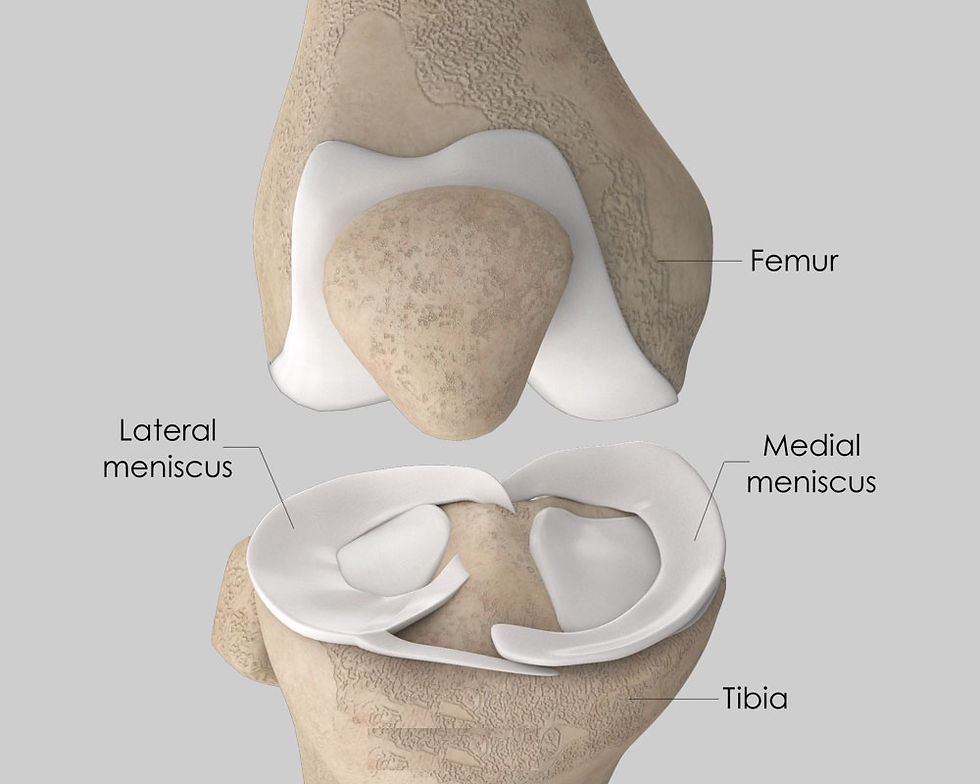
There are two rings of cartilage on either side of the knee called the meniscus / menisci. They are called the "medial" and "lateral" meniscus.
What does the meniscus do?
The meniscus acts as a shock absorber in the knee, absorbing load during daily activities and also more rigorous activities, such as when running or playing sport. The meniscus also have an important function in supporting and providing stability to the knee.
How do you tear a meniscus?
Meniscus tears are very common. They can occur after a specific injury or sometimes, more commonly, they occur without an obvious cause. When there is no obvious cause, the tear can be a sign of early wear or degeneration in the knee.